
Skip to content
Some links are advertising or affiliate links. How we make money
THRYV News

Independent reviews, guides and reporting.

Tech

Explainer

One connector, many rules: how to read USB-C charging specs

The port is standard. The cable, the charger and what the two negotiate between them are not — which is why a laptop can charge slowly from a perfectly good plug.

By THRYV Tech Desk·Published July 28, 2026·Updated July 31, 2026·6 min read
One connector, many rules: how to read USB-C charging specs
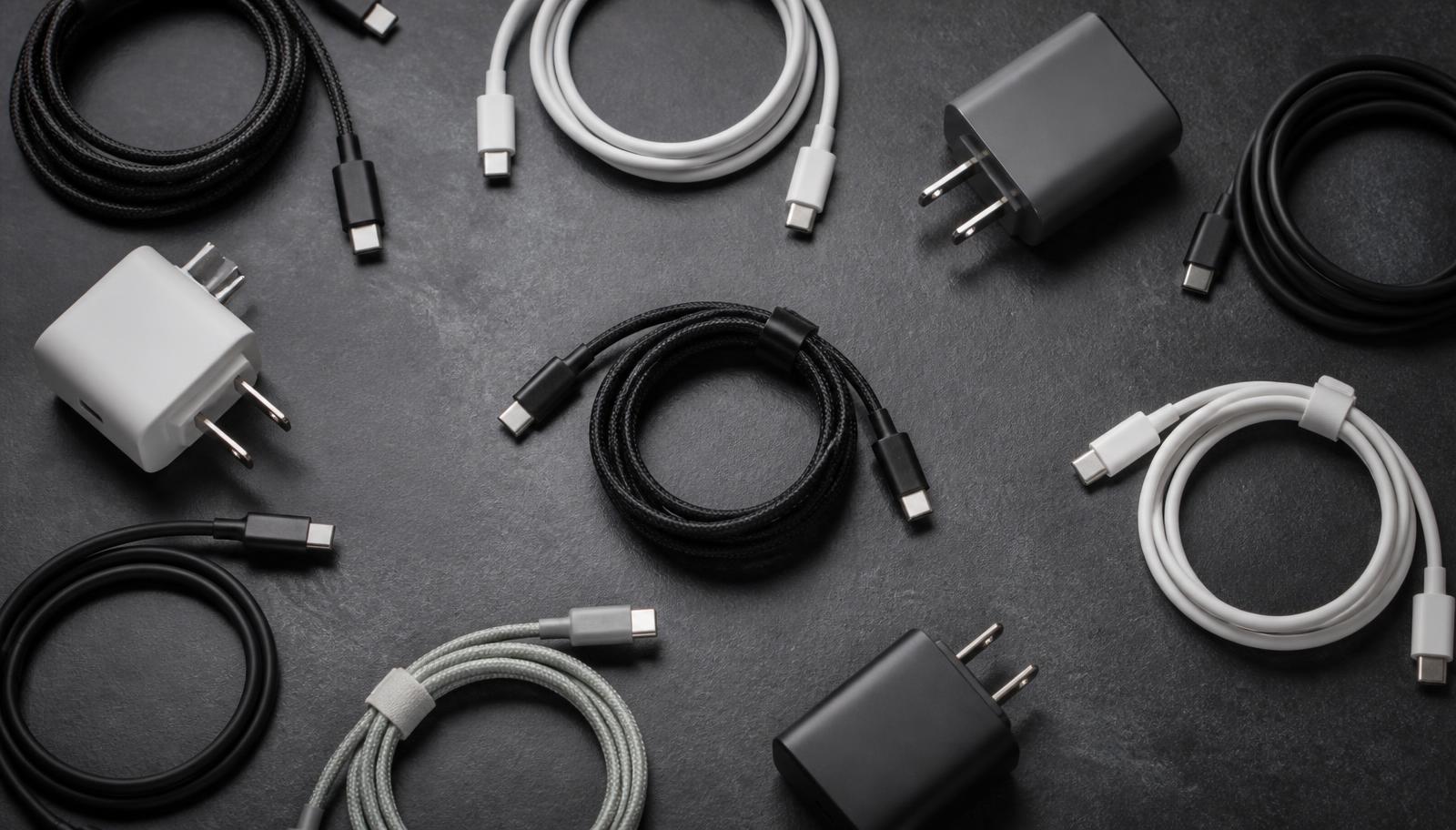
Tech · Illustration commissioned for THRYV. Photography is replaced with original imagery as each story is produced.

The takeaway

USB-C standardised the physical connector, not the capability behind it. Charging speed depends on the wattage the charger can deliver, whether both ends support USB Power Delivery, and whether the cable is rated to carry that current. Data speed is a separate specification again, and cables rarely state it.

The move to a single connector removed one frustration and introduced a subtler one. Two identical-looking cables can differ by a factor of five in charging power and by far more in data throughput, and nothing on the outside says which is which.

The three numbers that matter

Charger output in watts

A charger advertises a maximum. It will deliver less if the device asks for less. Phones typically negotiate somewhere in the tens of watts; laptops frequently want considerably more, and a low-wattage charger will keep a laptop alive under light load while still losing ground under heavy use.

Power Delivery support on both ends

USB Power Delivery is the negotiation protocol. Both the charger and the device must speak it to move beyond a basic low-power default. Proprietary fast-charging schemes exist alongside it and generally only work within one manufacturer's own accessories.


Cable current rating

Cables rated for higher current contain an identifier chip that tells the charger what they can carry. A cable without it caps the negotiation regardless of how capable the charger and device are.

Data and power are unrelated

A cable can carry full charging power and still transfer data at the slowest available speed. If you plan to connect a display or an external drive, look for the data specification explicitly — the charging figure tells you nothing about it.

Buying without guessing

  • Match the charger's wattage to the most demanding device you intend to charge, not the least.
  • Buy cables that state both a wattage rating and a data speed on the packaging or listing.
  • Keep one clearly marked high-capability cable for the laptop rather than rotating the whole drawer.
  • Treat unmarked bundled cables as low-power accessories until proven otherwise.

THRYV has not lab-tested individual cables or chargers for this article, and recommends no specific product here.

Sources

This article is original writing by THRYV. We link to primary reporting and official documents rather than reproducing them.

  1. USB Type-C and USB Power Delivery specificationsUSB Implementers Forum
  2. Common charger directiveEuropean Commission
  3. Product safety guidance for consumer electronicsUS Consumer Product Safety Commission

Why you can trust this article

Written and edited in-house by the THRYV Tech Desk. We do not republish or reword agency copy, and we do not invent quotes, statistics, testimonials or ratings. Where figures move frequently, we point you to the primary release rather than printing a number that will be out of date. Advertising and affiliate partnerships have no influence on our reporting — see our editorial standards, fact-checking policy and affiliate disclosure. Spotted an error? Write to newsroom@thryv-affiliate.com.

General information only. Not personalised financial, medical or legal advice.

Related guides

See all

Related reading

The THRYV Brief

The market in 5 minutes, weekday mornings

Plain-English analysis of the day's financial news, what it changes for households, and the primary sources behind it. No hype, no stock tips.

Free. Unsubscribe any time. We never sell your email address.

Advertisement · Newsletter sponsorship600×120
AURZEN EAZZE D1R Cube — the world's first Roku TV smart projector

Currently showing a THRYV house ad. This position is available to a single sponsor per edition, is labelled in the email and on this page, and does not influence what the Brief covers.