Thursday, September 17, 2026Independent, original journalismSome links are advertising or affiliate links. How we make money
Independent reviews, guides and reporting.
★0saved articles
AI
Explainer
AI-generated video advertising: reading the Smavida pitch carefully
A wave of platforms now promises to analyse a business, generate video ads and place them across streaming, social and connected TV automatically. Smavida is one of them — here is how to evaluate the model.
By THRYV Tech Desk·Published July 31, 2026·Updated July 31, 2026·8 min read
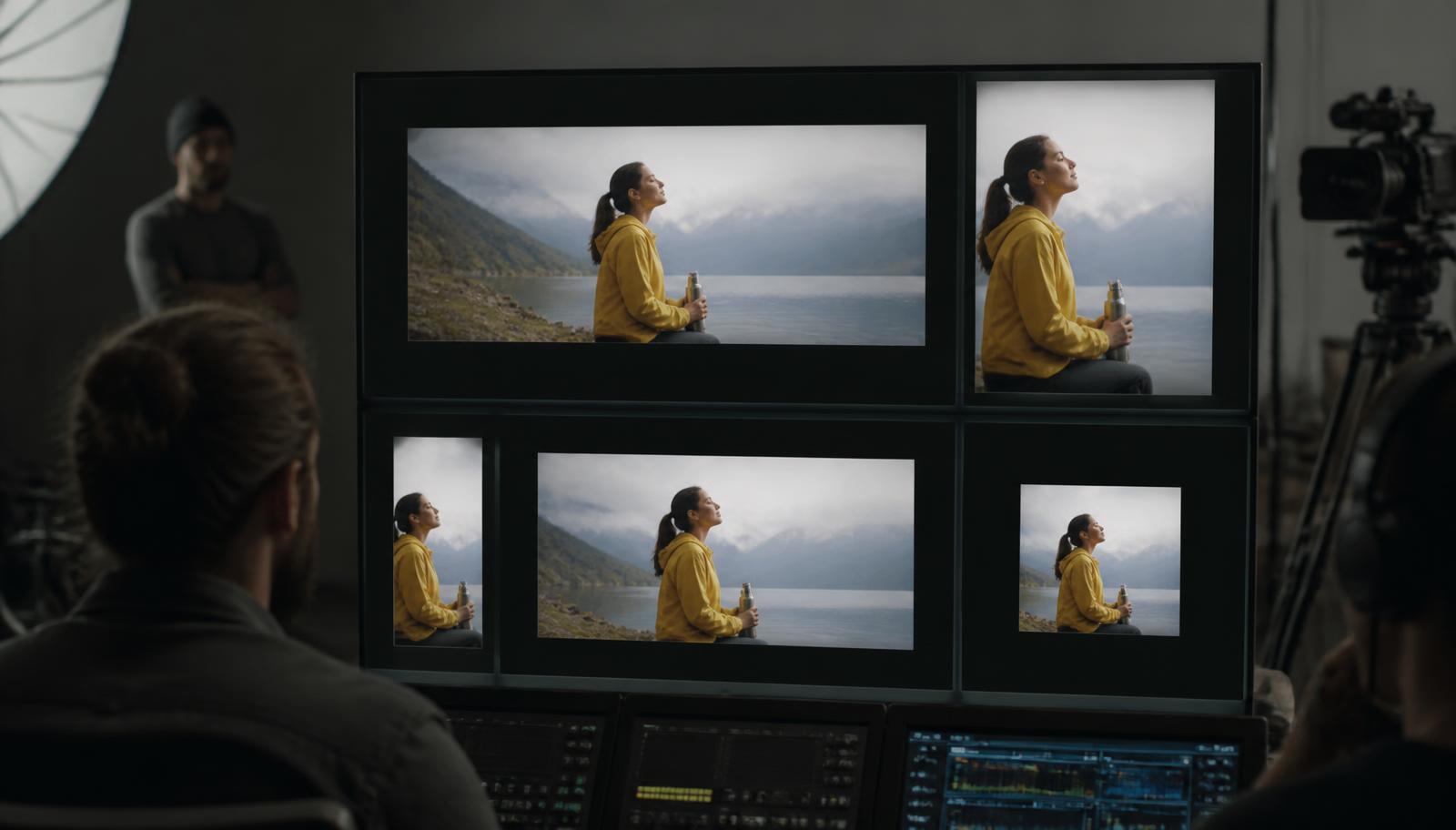
AI · Illustration commissioned for THRYV. Photography is replaced with original imagery as each story is produced.
The takeaway
Smavida markets an AI layer that analyses a business, generates video ad variations and deploys them across streaming, social, retail media and digital out-of-home from one place. The category is real and growing. What decides whether it works for a small business is creative quality, media transparency and measurement — questions to ask before signing anything.
For most of the past decade, running video advertising on premium channels meant three separate costs: an agency to plan it, a production team to shoot it, and a media budget large enough to clear a platform's minimum spend. A category of AI-native advertising platforms is now built on the argument that all three can be compressed into software. Smavida, which describes itself as a system that analyses a business, creates video ads and places them where its customers already spend time, is a clear example of the pitch.
Editorial note
THRYV has not tested Smavida, has no commercial relationship with the company and publishes no rating for it. Everything described below is drawn from the company's own public website, cited at the end, and is used to explain a category — not to recommend a vendor.
What the platform says it does
Smavida's public positioning has three parts. The first is what it calls autonomous creative intelligence: generating large numbers of on-brand video variations automatically, differentiated by audience, geography, intent and platform. The second is a single activation layer covering connected TV, streaming, social, retail media and digital out-of-home. The third is commercial: access to premium inventory without enterprise minimum spends or long agency contracts, with what it describes as itemised CPMs by channel and strategy, production and reporting included rather than billed as add-ons.
Its published workflow runs in four stages — planning and strategy, ad creation, activation across channels, and campaign intelligence — with each campaign's results feeding the next. That loop is the standard structure of programmatic advertising; the AI claim is about how much of it is automated and how much creative comes out the other end.
Why the category exists
Two structural shifts made this possible. Television advertising moved onto internet-delivered, addressable inventory, so a small advertiser can in principle buy the same streaming placement as a national brand in far smaller increments. At the same time, generative video tooling cut the marginal cost of producing a fifteenth variation of an advert close to zero. Where the old constraint was production capacity, the new constraint is deciding which variation to run and how to tell whether it worked.
Generating a thousand ad variations is a solved problem. Knowing which one earned the sale is not.
THRYV Tech Desk
The questions that decide the outcome
1. Who owns the creative, and how good is it?
Ask to see finished output from a business in your own sector, not a sizzle reel. Establish in writing whether you own the generated assets, whether they can be reused outside the platform, and who is liable if a generated advert misrepresents your product or breaches an advertising code.
2. What exactly are you paying for?
An all-inclusive price is only transparent if the media cost is itemised separately from the platform's own margin. Ask for CPMs by channel, the platform fee expressed as a percentage of media spend, and confirmation of whether the company is buying as an agent on your behalf or reselling inventory it has bought itself. The two arrangements create very different incentives.
3. How is performance measured?
Connected TV and out-of-home do not produce clicks. Reported outcomes therefore depend on attribution modelling, and the vendor usually supplies the model. Ask which measurement is independent, whether you receive log-level or placement-level delivery data, and whether the platform will run a holdout test — a matched audience that sees no advertising — as the honest baseline.
4. Where does your data go?
Business inputs, customer lists and campaign results are all processed to make the system work. If you operate in the EU or UK, establish the lawful basis, the processor agreements and whether your data trains models used for other advertisers.
A short due-diligence list
Request three finished creatives and one full delivery report from a comparable advertiser, with permission to contact them.
Get the media cost and the platform fee on separate lines of the same document.
Agree a minimum test budget and a fixed test window before committing to any longer term.
Define one primary business outcome — bookings, qualified leads, revenue — and one holdout to measure it against.
Confirm asset ownership, contract exit terms and data-processing arrangements in writing.
None of this is specific to Smavida. It is the standard the whole AI-advertising category should be held to, and it is the standard a small business needs precisely because the pitch removes the agency layer that used to ask these questions on its behalf.
Sources
This article is original writing by THRYV. We link to primary reporting and official documents rather than reproducing them.
Written and edited in-house by the THRYV Tech Desk. We do not republish or reword agency copy, and we do not invent quotes, statistics, testimonials or ratings. Where figures move frequently, we point you to the primary release rather than printing a number that will be out of date. Advertising and affiliate partnerships have no influence on our reporting — see our editorial standards, fact-checking policy and affiliate disclosure. Spotted an error? Write to newsroom@thryv-news.com.
General information only. Not personalised financial, medical or legal advice.
Preliminary figures reviewed by Bloomberg show the Claude maker's quarterly revenue jumped more than 14-fold year over year, as the company meets with banks ahead of a possible fall IPO.
A draft State Department letter reportedly warns countries they can't join both Washington's 'Pax Silica' AI coalition and Beijing's rival bloc — intensifying a fight for global AI influence.
The 30-billion-parameter model is free to download under an Apache 2.0 license, and Meta says it can handle agentic tasks like scheduling and coding on a laptop or gaming PC.