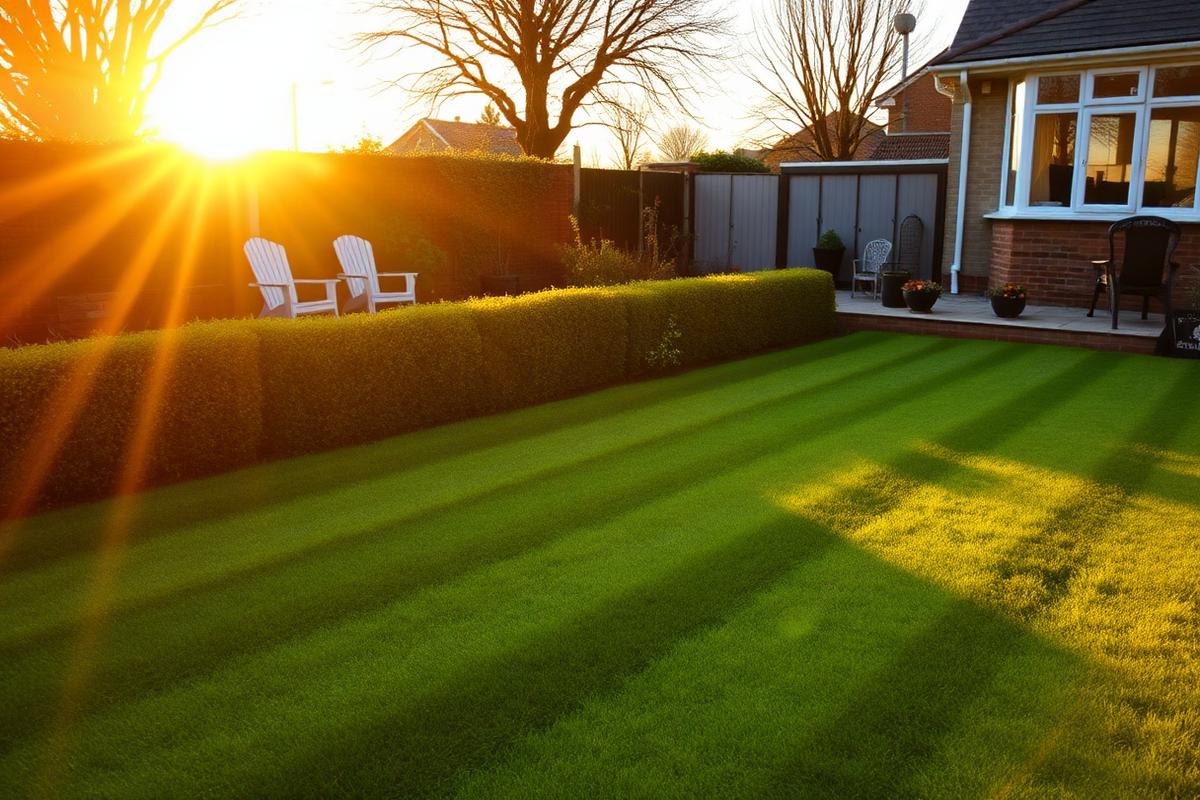
Lawn advice is unusually well served by public research, because agricultural extension services at land-grant universities have been publishing turf trials for decades. On mowing, the guidance is remarkably consistent and it contradicts how most gardens are actually cut.
The one-third rule
Extension guidance is that no more than about a third of the leaf blade should be removed in a single mow. Cutting more than that removes photosynthetic tissue faster than the plant can replace it, and the plant responds by diverting resources from roots to leaf regrowth. Shallow roots are then the reason the lawn browns first in a dry spell.
Higher in heat, and clippings left where they fall
Raising the cutting height during hot, dry periods shades the soil surface and slows moisture loss. Returning clippings rather than collecting them recycles nitrogen; extension services estimate this can supply a meaningful share of a lawn's annual nitrogen requirement, which reduces the case for routine fertiliser.
- Set the cutting height for the season, not the calendar: higher in heat and drought, lower only in cool, active growth.
- Mow often enough that each cut removes no more than a third of the blade.
- Leave clippings on the lawn unless they are long enough to clump.
- Sharpen or replace blades regularly — torn tips lose more water than cleanly cut ones.
Why this favours a robot
A robot mower cutting a few millimetres every day is the one-third rule taken to its logical end, and the fine clippings fall back into the sward. That is a genuine agronomic advantage over a weekly cut — separate from whether the machine is worth its price.
None of this replaces basic soil work. Where a lawn thins persistently, compaction and shade are more common causes than mowing practice, and extension guidance recommends testing soil before applying any fertiliser rather than treating a symptom.