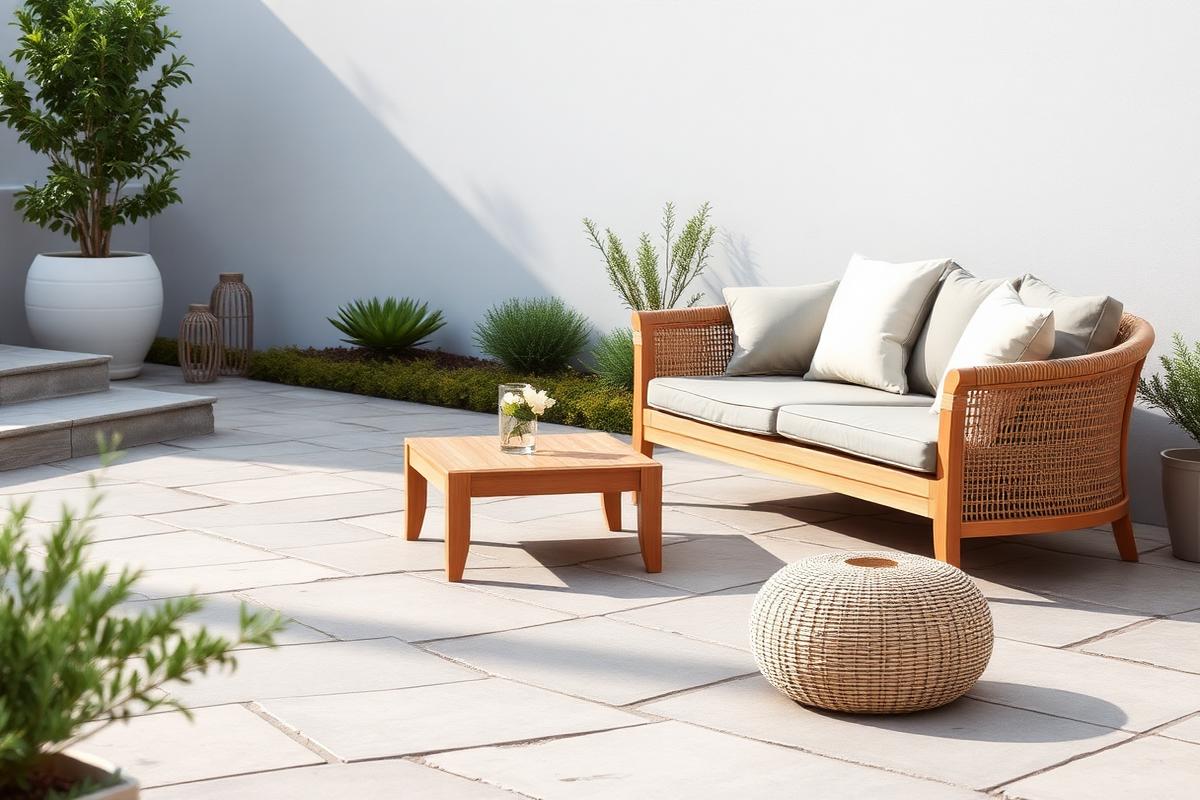
Every garden furniture range photographs well. The difference between sets shows up in the second winter, and it is almost entirely a question of material and of whether the manufacturer still sells the part that failed.
How each material behaves
- Recycled HDPE lumber: colour runs through the material, so scratches do not expose a substrate. Heavy, expensive, and effectively maintenance-free outdoors.
- Powder-coated aluminium: light, rust-free, and repairable with touch-up paint. Damage concentrates at fixings and stacking points.
- Teak and eucalyptus: durable if oiled annually; left bare they silver, which is cosmetic, but standing water at joints is not.
- Steel: strong and cheap, but any coat breach becomes rust. Check whether the frame is galvanised beneath the paint.
- Resin rattan: weatherproof frame at a low price; the cushions, not the weave, are what fail.
Cushions are the consumable
Fabric is usually rated for UV and water; foam rarely is. A cushion that spends summers outdoors compresses and holds water at the core, and once it does, the cover being washable is irrelevant. Sets whose cushion covers and inners can be bought separately outlast sets whose cannot, regardless of the frame.
Ask one question before buying
Can I buy a single slat, fixing kit or cushion inner in three years? A five-year warranty on a set with no spare-parts listing is a promise to replace the whole thing, which is a different offer from being able to repair it.
Storage and covers
Frames in HDPE, aluminium or resin can stay out year-round. Covers help wood and steel by slowing finish damage, but a cover that traps moisture against timber does more harm than none; ventilated covers and raising furniture off standing water matter more than the cover's fabric rating. Cushions should come indoors whatever the label claims.
Buy the material and the spare-parts list. The photograph is the same in every catalogue.